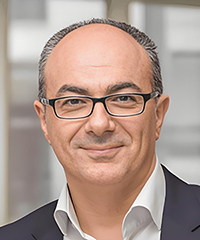
Schahram Dustdar
Professor, Catalan Institution for Research and Advanced Studies, Spain.
Research Interests: Distributed Systems, Internet of Things, Edge Computing, Edge AI, Active Inference.
More Information >>
Schahram Dustdar is Full Professor of Computer Science heading the Research Division of Distributed Systems at the TU Wien, Austria. He holds several honorary positions: Francqui Chair Professor at University of Namur, Belgium (2021-2022), University of California (USC) Los Angeles; Monash University in Melbourne, Shanghai University, Macquarie University in Sydney, University Pompeu Fabra, Barcelona, Spain. From Dec 2016 until Jan 2017 he was a Visiting Professor at the University of Sevilla, Spain and from January until June 2017 he was a Visiting Professor at UC Berkeley, USA.
From 1999 - 2007 he worked as the co-founder and chief scientist of Caramba Labs Software AG in Vienna (acquired by Engineering NetWorld AG), a venture capital co-funded software company focused on software for collaborative processes in teams. Caramba Labs was nominated for several (international and national) awards: World Technology Award in the category of Software (2001); Top-Startup companies in Austria (Cap Gemini Ernst & Young) (2002); MERCUR Innovation award of the Austrian Chamber of Commerce (2002).
He was founding co-Editor-in-Chief of ACM Transactions on Internet of Things (ACM TIoT) as well as Editor-in-Chief of Computing (Springer). He is an Associate Editor of IEEE Transactions on Services Computing, IEEE Transactions on Cloud Computing, ACM Computing Surveys, ACM Transactions on the Web, and ACM Transactions on Internet Technology, as well as on the editorial board of IEEE Transactions on Big Data, IEEE Internet Computing, IEEE Computer and of many more. Dustdar is recipient of multiple awards: TCI Distinguished Service Award (2021), IEEE TCSVC Outstanding Leadership Award (2018), IEEE TCSC Award for Excellence in Scalable Computing (2019), ACM Distinguished Scientist (2009), ACM Distinguished Speaker (2021), IBM Faculty Award (2012). He is an elected member of the Academia Europaea: The Academy of Europe, where he is chairman of the Informatics Section, as well as an IEEE Fellow (2016), an Asia-Pacific Artificial Intelligence Association (AAIA) President (2021-2023) and Fellow (2021). He is an EAI Fellow (2021) and an I2CICC Fellow (2021). He is a Member of the 2022 IEEE Computer Society Fellow Evaluating Committee (2022) and Chair of the Advisory Board of the National Edge AI Hub (led by Newcastle University, UK).
He has been a frequently invited expert evaluator for the IST 6th Framework (FP6), EU Horizon 2020 of the European Commission, an invited expert for the 7th Framework roadmap definitions for several working groups, as well as a Technical Expert for the roadmap definition for the European Commission's research on the Future Internet. He has been a scientific reviewer for the European Research Council (ERC) as well as a number of National Science Foundations e.g., DFG (Germany), NWO (Netherlands), SNF (Switzerland), EPSRC (UK), SFI (Ireland), Czech Science Foundation (GA CR), NSERC (Canada), FWO (Research Foundation Flanders, Belgium), FCT (Foundation for Science and Technology, Portugal), Panel on Computer Science and Information Technologies, R&D Units, FCT (Portugal), Einstein Foundation Berlin (Germany). On behalf of the National Commission for Scientific and Technological Development (CONICYT) and the Superior Council of the National Fund for Scientific & Technological Development (FONDECYT), Chile, Academy of Finland, Israel Science Foundation, EPSRC Peer Review College, New Zealand Ministry of Business, Innovation & Employment (MBIE), Cyprus Agency for Quality Assurance and Accreditation in Higher Education, L'Oréal-UNESCO For Women in Science Awards 2021 (Physical sciences, Mathematics and Computer science), Estonian Research Council (ETAg), review panel member of the Research Council of Finland.
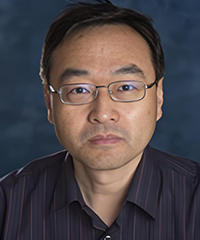
Xiaodong Liu
Professor, IEEE Senior Member, Edinburgh Napier University, UK.
Research Interests: Pervasive Systems, Internet of Things, Service-Oriented Architecture, Evolution of Cloud Services, Intelligence-Driven Smart Systems.
More Information >>
Prof. Xiaodong Liu has been very active in the research in AI-driven software engineering, focusing on pervasive systems (Internet of Things), service-oriented architecture, evolution of cloud services, and intelligence-driven smart systems. He has won 12 external grants and successfully led or leading these externally funded projects with the role of principal investigator. Currently Prof. Liu leads the Intelligence-Driven Software Engineering Research Group. He is the founder a spin out company, FlexiCAGE Ltd. He has published 170 papers in refereed international journals and conferences and 5 book chapters. He is the inventor of 1 patent in Generative Component Adaptation registered in UK, USA and at International Level (PCT). He has been the chair, co-chair or PC member of a number of IEEE and IASTED International Conferences. He is the associate editor of 2 international journals and the editorial board member of 3 international journals. He is the chief editor of 3 IGI Global Research Handbooks. He is the regular reviewer of other 6 international journals. He is a senior member of IEEE Computer Society, and a member of British Computer Society.
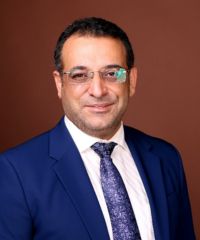
Hamed Taherdoost
Associate Professor, IEEE Senior Member, University Canada West, Canada.
Research Interests: Management of Information Systems, Technology Acceptance Models and Frameworks, Information Security Management, Research Methodology, Information Security – Cybersecurity.
More Information >>
Dr. Hamed Taherdoost is an award-winning leader and research and development professional. He is the Founder of Hamta Group | Hamta Business Solution and Associate Professor & Chair of Research and Scholarly Activities Committee at University Canada West. He has over 20 years of experience in both industry and academic sectors. He has been a university lecturer in three different parts of the world, Southeast Asia, the Middle East, and North America. Besides, he has organized and chaired numerous workshops, conferences, and conference sessions respectively, and has delivered speeches as chief guest and keynote speaker. His views on science and technology have been published in top-ranked scientific publishers such as Elsevier, Springer, Emerald, IEEE, IGI Global, Inderscience, Taylor and Francis and Dr. Hamed has published over 200 scientific articles in authentic peer-reviewed international journals and conference proceedings. He has been listed on the Stanford-Elsevier list of World’s top 2% of scientist by August 2021 and 2022. He is a Certified Cyber Security Professional and Certified Graduate Technologist. He is senior member of IEEE, IAEEEE, IASED, IEDRC & HKSRA, Fellow Member of ISAC, WGM of IFIP TC11 - Assurance and Information Security Management, and member of CSIAC, ACT-IAC, and AASHE. Currently, he is involved in several multidisciplinary research projects, including studying innovation in information technology, blockchain and cybersecurity, and technology acceptance

Giuseppina Carla Gini
Associate professor, Politecnico di Milano, Italy.
Research Interests: Artificial Intelligence, Robotics, Machine Learning, QSAR, Predictive Modeling.
More Information >>
Giuseppina GINI received a 'Laurea' degree in Physics from the Milan State University in 1972. Between 1972 and 1976 she specialized in Computer Science and Artificial Intelligence at Politecnico di Milano, Institute of Electrical and Electronic Engineering. From 1976 to 1978 she was Visiting Scholar and Research Assistant at the Artificial Intelligence Laboratory of the Stanford University, California, USA. From 1978 to 1987 she held an Assistant Professor position at Politecnico di Milano together with various appointments as Research Fellow at Stanford University, Computer Science Department and NMR Laboratory, and SRI International. Since 1987 she is an Associate Professor of Robotics at the Department of Electronics and Information, Politecnico di Milano, Italy.
Among other professional services, she served as the Program Co-chair for the Video-Conference on Robotics (March 2000) between Microsystems Technology Laboratories of MIT (Boston), Politecnico di Milano, and Padova University; for the AI&Math special session on Knowledge Exploration in Predictive Toxicology, January 2000; for the AAAI Spring Symposium on Predictive Toxicology (Stanford 1999), and for the IFIP Symposium on Robotics, Como, 1986. She was a Program committee member for various Conferences. She is in the Editorial board of KES Journal. She is a reviewer for ACM Computing Reviews, IEEE Trans on Robotics, Int. Journal of Production Research, J of approximate reasonong, Int. Journal of Chemical Information and Computer Sciences, as well as various AI and Robotics Journals and Conferences.
Since 1985, she is and has been director of more than 30 International and National Research Projects (from NATO and EU), and coordinator of one of them devoted to the development of new methods in predictive toxicology. She was a National Delegate in the Management Committee of the EU COST Action 282 on Knowledge Exploration in Science and Technology.
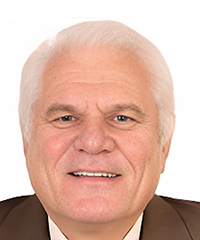
Gheorghe-Daniel Andreescu
Professor, Politehnica University Timisora, Romania.
Research Interests: Advanced Control of Electric Motor Drives – Observers, Mechatronic Systems, Control of Power Converters, Greenhouse Climate Control.
More Information >>
Gheorghe-Daniel Andreescu was born in Caracal, Olt, Romania. He received the M.Sc. degree in applied electronics and the PhD degree in automatic control systems from the Politehnica University Timisoara (UPT), Timisoara, Romania, in 1977 and 1999, respectively.
Since 1984, he has been with the Automation and Applied Informatics Department of UPT, where he is currently a Full Professor and PhD advisor in Automation (System engineering). Prof. Andreescu was Director of the UPT Doctoral School of Engineering Studies (2012-2017), and was manager of 4 UPT strategic grants for doctoral scholarships with European structural funds in the POSDRU Romanian program, 2007-2013. He is an Emeritus Professor of UPT in 2022.
His main research areas include: advanced control of ac drives, sensorless control, observers, sliding-mode control, power electronics control, renewable energy, green-house climate control systems, drum-boiler control systems in thermal power plants, control of mechatronic systems, modelling and analyses of hearing with cochlear implants - auralization, real-time implementations.
He is the author or coauthor of 100+ papers published in international journals and conference proceedings; 22 in journals indexed in Web of Science (WoS) with WoS total impact factor/2023 of 74.5.
He has 2300+ citations in indexed journals, conference proceedings and books/book chapters: 1700+ in WoS, with total journal impact factor over 4200, average value of 4.1, and Hirsch WoS factor of 17, citations including authors from 190 universities (38%) from Top 500 World Universities/2024. He is a reviewer of 25+ scientific journals indexed in Web of Science. He was Co-Chair of the Program Committee, Organizing Committee, Publicity and Publications Committee of 50+ indexed international conferences in 10+ countries.
Prof. Andreescu is a Senior Member of the Institute of Electrical and Electronics Engineers (IEEE) since 2005, member of the International Federation of Automatic Control IFAC Technical Committee TC4.2 Mechatronics Systems since 2003, and of the IFAC Technical Committee TC 8.1 Control in Agriculture (2016-2018). He was a member of the Commission of Computers, Information Technology and System Engineering of the National Council for Attesting University Titles, Diplomas and Certificates (CNATDCU) in 2017-2024, and was member of the Commission of Engineering Sciences of the National University Research Council (CNCSIS), Romania. Prof. Andreescu is a recipient of the "Tudor Tanasescu" Award of the Romanian Academy for Advanced automation in 2016.
Sudan Jha
Professor, Kathmandu University, Nepal.
Research Interests: Internet of Things, Artificial Intelligence, Quality Assessment and Security issues in IoT devices.
More Information >>
With over 23+ years of combined teaching, research, and industrial experience, Sudan Jha is a Senior member of IEEE and a Professor in the Department of Computer Science & Engineering at Kathmandu University, Nepal. He is lead researcher of the IoT R&D lab at Kathmandu University. His previous affiliations include KIIT University, Chandigarh University, Christ University, etc. He was 'Technical Director' at Nepal Television, 'Principal' at Nepal College of IT, and 'Individual Consultant' at Nepal Telecom Authority.
Prof. Jha is dedicated to advancing higher education quality and actively works on smart platforms. His extensive research portfolio comprises 80+ SCI, SCIE indexed research papers and book chapters in international peer-reviewed journals and conferences. He serves as a Co-Editor-in-Chief in an international journal. He also serves as Guest Editor for SCIE/ESCI/SCOPUS indexed journals. With three patents to his name, he has authored and edited 6 books on cutting-edge topics in IoT, 5G, and AI, published by Elsevier, CRC, and AAP. His research has also secured funding for two international projects.
Additionally, Prof. Jha contributes as a Keynote at more than 40 international conferences. In addition, he has also delivered faculty development programs, short-term training programs, and workshops in national and international conferences, and universities. He holds certifications in Microservices Architecture, Data Science, and Foundations of Artificial Intelligence.
His primary research interests encompass Quality of Services in IoT enabled devices, Neutrosophic theory, and Neutrosophic Soft Set Systems.

Deepika Koundal
Associate Professor, University of Eastern Finland, Finland.
Research Interests: Computer Vision, Image and Signal Processing, Machine Learning | Deep Learning, Artificial Intelligence, Medical Image Analysis.
More Information >>
Dr. Deepika Koundal has received recognition and honorary membership from Neutrosophic Science Association at University of Mexico, USA. She was selected as a young scientist in 6th BRICS Conclave in 2021. She received her Master's and Ph.D. degrees in Computer Science & Engineering from the Panjab University, Chandigarh in 2015. She received the B. Tech. degree in Computer Science & Engineering from Kurkushetra University, India. She an awardee of the research excellence award given by UPES in 2023 and 2022 and by Chitkara University in 2019. She has published more than 100 research articles in reputed SCI and Scopus-indexed journals, conferences and three books. She served as a guest editor in Computers & Electrical Engineering, Internet of Things Journal and IEEE Transaction of Industrial Informatics. She is also serving as Associate Editor in IEEE Transactions in Artificial Intelligence, IEEE-RAL, Healthcare Analytics, Supply chain Management and International Journal of Computer Applications. She also has served on many technical program committees as well as organizing committees and invited to give guest lectures and tutorials in Faculty development programs, international conferences and summer schools.
Hongliang Ren
Professor, The Chinese University of Hong Kong, China.
Research Interests: Intelligent Surgical Robotics, Continuum Compliant Cooperative and Cognitive Robotics (C4r), Untethered Flexible Robotics and Sensing, Biorobotics & Intelligent Systems, Medical Mechatronics, Continuum, and Soft Flexible Robots and Sensors, Multisensory Perception, Learning and Control In Image-Guided Procedures, Deployable Motion Generation, Compliance Modulation/Sensing, Cooperative and Context-Aware Sensors/Actuators in Human Environments, Data-Driven Robotic Surgery, Flexible Robotics and Machine Artificial Intelligence.
More Information >>
Professor Hongliang Ren received his Ph.D. in Electronic Engineering (Specialized in Biomedical Engineering) from The Chinese University of Hong Kong (CUHK) in 2008. He has been navigating his academic journey through Chinese University of Hong Kong, UC Berkeley, Johns Hopkins University, Children's Hospital Boston, Harvard Medical School, Children's National Medical Center, United States, and National University of Singapore. He has served as an Associate Editor for IEEE Transactions on Automation Science & Engineering (T-ASE) and Medical & Biological Engineering & Computing (MBEC). He has served as an active organizer and contributor on the committees of numerous robotics conferences, including a variety of roles in the flagship IEEE Conf. on Robotics and Automation (ICRA), IEEE Conf. on Intelligent Robots and Systems (IROS), as well as other domain conferences such as MICCAI/ROBIO/BIOROB/ICIA/CVPR. He served as publicity chair for ICRA 2017, concurrently as Organizing Chair for ICRA 2017 workshop on Surgical Robots, and video chair for ICRA 2021. He has delivered numerous invited keynotes/talks at flagship conferences/workshops at ICRA/IROS/ROBIO/MICCAI/CVPR/ICIA. He is the recipient of IFMBE/IAMBE Early Career Award 2018, Interstellar Early Career Investigator Award 2018, Health Longevity Catalyst Award (2022 by NAM & RGC), NUS Engineering Young Researcher Award (2019), Interstellar Early Career Investigator Award (2018), ICBHI (Biomedical and Health Informatics) Young Investigator Award (2019), NUS Young Investigator Award (2013), EMedic Global Gold Medal (2017) and Silver Medal (2021), Best Paper Awards in IEEE-ROBIO (2019 & 2013), IEEE-RCAR2016, IEEE-CCECE2015, IEEE-Cyber2014 among 30+ others awards.
He frequently served as an expert reviewer/judge for international funding agencies (60+ proposal reviews) of 10+ countries/regions (including Switzerland, Belgium, UK, Kazakhstan, Poland, Hong Kong, Macau, Chilean, China, Singapore etc.) and manuscript peer-reviews 317+ times for journals, including Science Robotics, Nature Biomedical Engineering, Nature Communications among many other top-tier journals.